

...so you can communicate better with the people you love.
How to Communicate Better With Family and Friends You Disagree With. Try This Practice on Piano
The short answer: before you reply, find what you care about underneath your opinion, and say that. Then ask the other person what they care about most, and leave room for their answer. A few minutes at a piano is a good place to practice it, and you don't need to know how to play.
Does the potential for disagreements with loved ones or friends follow you around, leaving you wary about sharing your take on politics or spirituality or anything potentially polarizing? And how could a piano practice, of all things, help you communicate better with them?
A season for listening
This time of year the dark comes early. More of life moves indoors, and a lot of us end up in more rooms and at more tables with the people we love. Since the midterms, some of those conversations carry a charge.
Winter is the season of long nights. A lot of what's alive goes underground for a while. Seeds rest in the cold ground before anything comes up. It's a season for slowing down, and for listening.
I think it's a good season for the kind of listening a disagreement asks of us.
Why do conversations about politics go wrong with people we love?
When a subject like politics comes up with someone we care about, a lot of us end up in one of a few places.
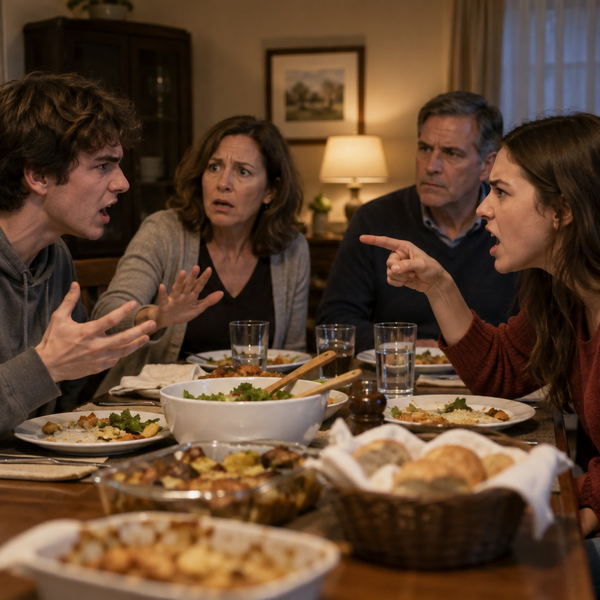
Some of us say nothing, and then have the whole conversation later, alone, where it goes perfectly.
Some of us say a softer version of what we mean, and keep softening it until it isn't what we meant anymore.
And some of us bring our best arguments. We make them well, and nobody changes their mind.
What those three have in common is timing. The answer shows up before the listening is done. It answers what we expected them to say, which isn't always what they were trying to say.
Two hands
At the piano I play with two hands, and they can play very different things at the same time. The music happens between them.
Here's something I find fascinating: putting two opposites together is what happens at the core of creativity. Something new gets made that neither one could make alone.
A disagreement with someone we love can feel like holding what we believe in one hand and the person in the other, with no way to hold both at once. The piano is a place to practice holding both.
What's underneath an opinion?
A strong view usually has two layers. On top is the opinion: what I think happened, who's right, what ought to be done. Under it is something I feel before I have words for it. That's the part that matters to me.
An opinion invites a debate. What's under it usually doesn't. There isn't much to dispute in "this matters to me."
In the video I play these two layers at the piano, so you can hear the difference.
A coach I trained with, my friend Jerry Donoghue, has a way of putting this. When two people land on opposite sides of politics, their needs tend to be a lot closer together than their positions are. Where they split is on the route for meeting those needs. Hearing that took some pressure off my own urge to win people over.
That changes which question is worth asking. In place of "How can you believe that?" there's "What matters most to you here?" It helps to put that same question to myself first.
Why a piano?
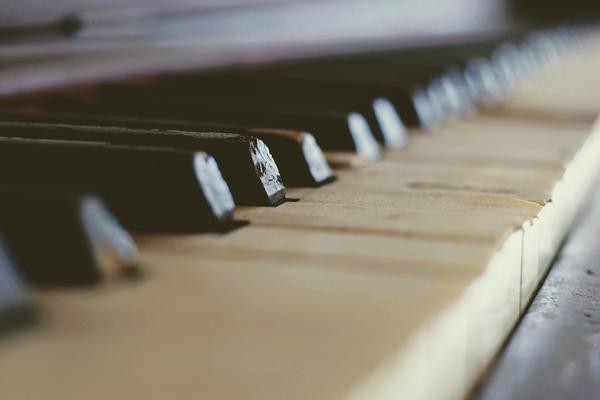 For one thing, it's an amazingly versatile and dynamic sound-making device. Between 88 keys, huge volume variability, and 10 fingers, there are worlds of potential on it.
Second, it answers right away. You play a note and hear it immediately, whether it's what you most wanted to say or play or not. Knowing we should listen before we react is one thing. Doing it is another.
That's why a practice is needed. It gives us the chance to gradually release old habits and learn new ones that we can align with, naturally and authentically.
And nothing you play can hurt anybody's feelings. That makes it a good place to practice before the conversation that matters.
A ten-minute piano practice for difficult conversations
You don't need any piano experience for this. One finger of each hand is plenty. Give it about ten minutes, on one of these long evenings if you like.
- Find a keyboard. Any piano or keyboard works.
- Think of something you believe strongly. It could be about politics, or about anything else.
- With your right hand, play a few notes for it. Any notes. Let them ring.
- Ask yourself what you care about underneath it. Not what you think about it. What you care about.
- With your left hand, play a low note for that, or a few. The low notes are on the left side of the keyboard.
- Let them all ring. Let them be.
- Play your first notes again, over the low notes. Both hands now.
Then listen. What's different when both hands are playing?
What to listen for
None of these mean you're doing it wrong.
The quiet after the notes. It counts. Silence is part of listening, and in a dark season there's more of it to work with.
A note that sounds wrong. You don't have to fix it. Try putting a low note under it and listening to the two together. Harmony doesn't need everyone on one note. It's what we call it when different notes find a way to fit.
A voice with opinions. Something like "that sounded dumb" or "I'm not musical." You can hear it and keep playing.
Wanting to stop before anyone could hear. Even when nobody's home. Is it safe to be heard, even by yourself? That's a real question, and the piano is a kind place to ask it.
How do you talk about politics with family without fighting?
Say what's true for you. That doesn't mean going quiet, or watering down what you mean. The truth is simply inarguable. How you feel about something. What you care about. What you would like to see more of. And what you would like to see less of.
Ask what they care about. Then listen for the answer underneath the answer.
Leave some room. In music, the rests are part of the piece. A good player will sometimes sit out a beat because the music is better for it. Conversations have rests too. Not every sentence needs an answer right away.
To me, this is near the center of what a democracy is. People stay connected, and they do their disagreeing from inside that connection. Take the connection away and there's nothing left to hold the disagreement.
So a more harmonious democracy, as I see it, doesn't have to wait until we agree. It gets built at ordinary tables like yours, by people who care about each other, each one saying what's true for them, and nobody leaving.
The longest night of the year comes in December. After that, the light starts coming back, a minute or two a day. Not all at once.
Questions people ask
Should I just avoid talking about politics with family?
That's yours to decide, and some days staying quiet is the right call. What I'd watch for is going quiet so nobody gets upset, and then carrying it around afterward. I'd rather say what's true for me, as clearly as I can, and then stay in the room.
What if they won't listen?
Nobody can make another person listen. What I can do is listen first. It seems people are a lot more open to how I see it once they feel I've understood how they see it.
Do I need to know how to play the piano?
No. One finger of each hand is plenty. You don't need to read music or know the names of the notes. The piano answers right away, and nothing you play can hurt anybody's feelings.
How often should I do this?
Ten minutes most days is a good rhythm. It's a practice, so it works by coming back to it, a little at a time.
Is this therapy?
No. It's a practice for everyday conversations, not therapy or mediation. If a relationship is unsafe or abusive, please reach out to someone trained to help with that.
If you'd like to go further
I've spent about twelve years helping people use piano and drum improvisation to practice for moments like these.
The place I'd point you first is free. It's a fifteen-minute listening practice, and you don't need an instrument or any experience for it.
And if you're curious why I think a piano is such a good place to practice this, I've written about that here.
Whether or not you ever do this work with me, I encourage you to have a practice of navigating the unknown with immediate feedback in real time.
Listen, Feel, and Play on!


Comments