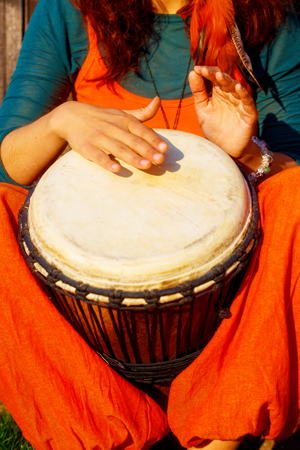
Sounding What’s Present is an invitation to meet yourself through rhythm and listening.
With one drum and very few choices, attention shifts away from thinking and toward sensation, impulse, and timing. You’re not asked to make music or develop patterns, but to let sound arise in response to what’s here — and to stop when it completes.
In this simple field, rhythm reveals its natural intelligence. A change in intensity, a pause, a repetition — even the most minimal pulse — can carry meaning. You may experience how sound moves through you and how it is received by others, without explanation or performance.
No musical background is needed. Only a willingness to listen and let what’s present find its voice.
Sounding What’s Present is an invitation to meet yourself through rhythm and listening.
With one drum and very few choices, attention shifts away from thinking and toward sensation, impulse, and timi…
![AdobeStock_82726573-[Converted]-sm](https://img.simplerousercontent.net/scaled_image/13525591/fb9c45fdff786a03eeece6831cb9d11fc6791301/AdobeStock_82726573-Converted-sm-545w-545h.png)
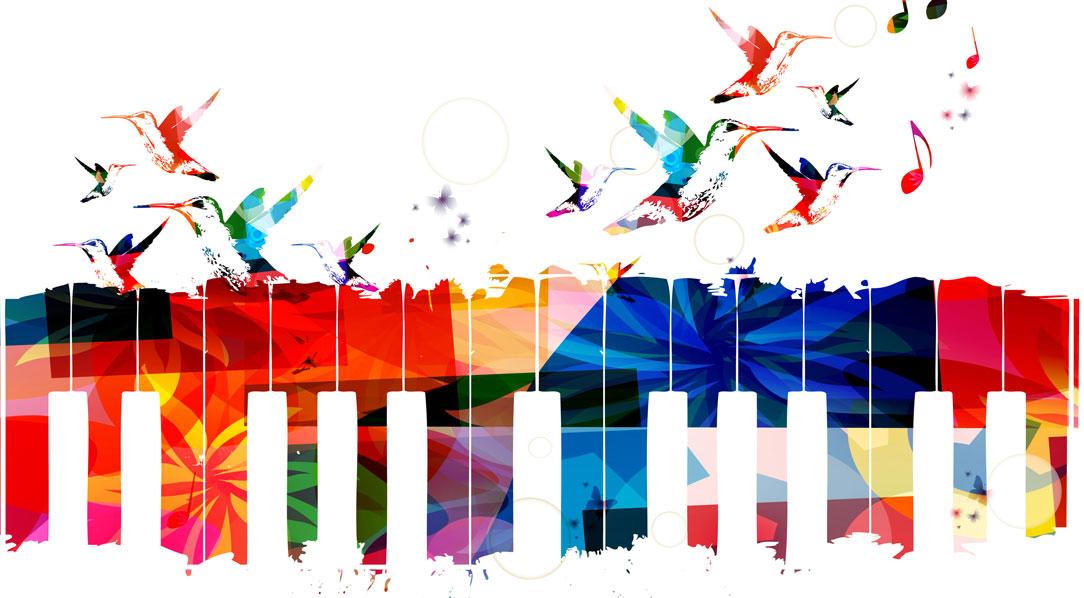
Playing the Fields is a simple and surprisingly powerful way to meet and engage the piano in all 12 keys in one hour.
This is not a collection of songs, a theory‑heavy curriculum, or a performance program. It is about orientation. Rather than telling you what to play, this course shows you how the keyboard is organized so you can move with clarity and confidence. The 88 keys begin to resolve into clear, repeating patterns, and the instrument feels less overwhelming and more playable.
As you move through the short videos (<45 mins total), complexity reduces to simple geometric relationships you can see and feel. You are not copying or chasing correctness. You are exploring. Even early on, many people find themselves making music that feels real rather than mechanical. Once the layout becomes visible in this way, you may be shocked at how easy the piano becomes. The keyboard opens.
Go slowly. Touch the piano. Let the patterns settle into your hands. This approach begins with listening and direct contact rather than pressure or performance. What you discover here is not only how the keys relate, but how you relate to them. And that shift often carries further than expected.
Playing the Fields is a simple and surprisingly powerful way to meet and engage the piano in all 12 keys in one hour.
This is not a collection of songs, a theory‑heavy curriculum, or a performance pr…
Establishing orientation through listening, contact, and choice.
The Core is where we come from and where we return for our vitality, inspiration, and sustenance. We will explore and play with the essential skill of navigating the unknown capably by playing and experimenting with it through an intuitive approach to improvisation on piano.
You will be introduced to tools to use regularly to notice your foundational creative connection and how to retune and realign it.
In this Core course, you will:
-
nurture and become more deeply familiar with how to improvise in all 12 keys
-
develop a physical and auditory sense of where you are at all times
-
use sound as a reliable way to orient, ground, and respond
Choose the Core if you want a clear beginning, and a foundation you can stand on, on the piano and elsewhere, regardless of what comes next.
Establishing orientation through listening, contact, and choice.
The Core is where we come from and where we return for our vitality, inspiration, and sustenance. We will explore and play with the es…
Sustaining practice across greater musical and perceptual complexity.
The Journey builds on the Core by zooming in.
You will learn to:
-
clearly distinguish notes that create tension from those that offer release
-
understand this relationship as the central engine of music
-
nurture your capacity to stay present when tension arises
-
apply specific, practical techniques that make this process intuitive rather than theoretical
This work is taught at a primordial, hands‑on level, so you are attending to the emotional impact of the different notes as you absorb the structures of harmony.
Sustaining practice across greater musical and perceptual complexity.
The Journey builds on the Core by zooming in.
You will learn to:
-
clearly distinguish notes that create tension from those t…
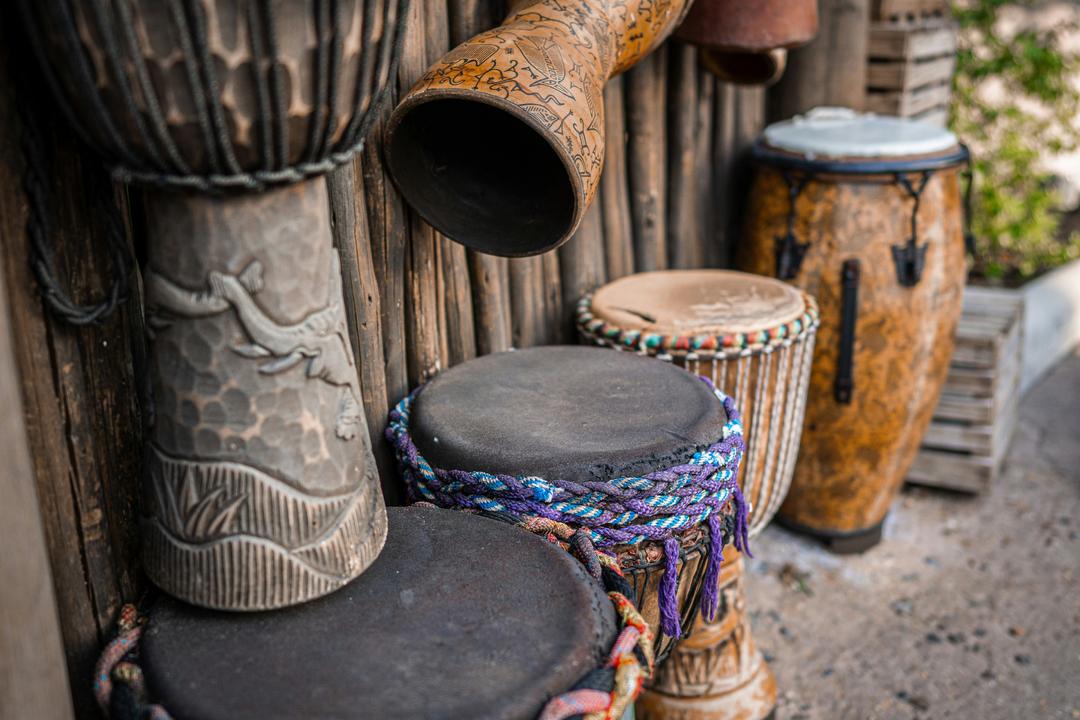
A foundational drum practice for restoring orientation through rhythm, contact, and sound.
Using simple, intuitive drumming, this container supports:
-
grounding attention
-
regulating the nervous system
-
developing a reliable sense of timing
Musical focus:
Foundational improvisation & orientation through rhythm.
You’ll be:
-
establishing rhythmic ground
-
sensing pulse as a stabilizing force
-
building trust in simple, repeatable practice
This is a clear starting point — and a complete practice in itself.
A foundational drum practice for restoring orientation through rhythm, contact, and sound.
Using simple, intuitive drumming, this container supports:
-
grounding attention
-
regulating the nerv…
A sustained drum‑based practice for remaining oriented while holding complexity, intensity, or others.
This arc includes The Beat and continues into The Conversation, where rhythm becomes a reference point for responding, relating, and adapting.
Selected traditional rhythms may be introduced as stabilizing structures.. not as repertoire, but as support for continuity.
Musical focus:
Foundational improvisation & orientation through rhythm, over time.
You’ll be:
-
maintaining orientation under pressure
-
staying grounded while relating or responding
-
using rhythm as a stabilizing reference across change
A sustained drum‑based practice for remaining oriented while holding complexity, intensity, or others.
This arc includes The Beat and continues into The Conversation, where rhythm becomes a reference…
The Tune U Quest is a radically new approach to mindful awareness and creative expression.
You will engage with the piano in an entirely new way than you likely ever have before. Instead of approaching it as an instrument for performing or "achieving" something, we will be using it as a way of learning how to renegotiate your relationship with your deep nature, with music, with your thoughts and inner voices, and with the piano, too.
In the process, you will regain your own sense of clarity and agency for experiencing yourself as you are deep down, and as a creative instrument on your own terms. From this new vantage point of your own authentic self, you can experience everything you come across in new ways.
This program is a 12-month program that includes the 4 quarterly courses.
These 4 courses comprise the complete yearlong framework grounded in the 4 seasons, the 4 directions of many indigenous traditions (incl the Cherokee here in North Carolina), and the 4 Paths of Creation Spirituality (laid out by Matthew Fox).
By incorporating these spiritual traditions along with many perspectives on personal, social, and political points of view, this program offers a way for you to T.A.P. the Flow of your own deep connection so you can bring your unique gifts more clearly, creatively, and courageously to this world that needs them so much.
The Tune U Quest is a radically new approach to mindful awareness and creative expression.
You will engage with the piano in an entirely new way than you likely ever have before. Instead of approach…
The Listening Practice
This is Step 1.
Before you play a note, before you learn a scale, before you touch an instrument, you listen.
The Tune U approach to improvisation begins here because listening is where music actually lives. Not in the fingers. Not in the theory. In the quality of attention you bring to sound.
This practice is a meditation. It invites you to explore how you listen, and whether there might be other ways. Ways that are more open, more receptive, more present to what sound actually is before we decide what to do with it.
It takes about 10–15 minutes. You can do it anywhere, even in a noisy room.
The effects can be immediate or they can build over time. Either way, this is the foundation. Everything else in Tune U rests on it.
The Listening Practice
This is Step 1.
Before you play a note, before you learn a scale, before you touch an instrument, you listen.
The Tune U approach to improvisation begins here because listeni…

Thank you so much for your contribution to The Sound Society Fund. In Tune U, there is a core truth we come back to again and again:
If you're not playing, it's not working.
By sharing your resources, you are doing so much more than funding a scholarship. This is a beautiful way of "playing" with the generative, creative life force we practice in this work.
Every single contribution lands somewhere specific. Your support translates directly into a partial scholarship for someone who is ready to realign with who they truly are, but just needs a little help getting into the room.
Thank you for helping us make this practice more accessible, and for being such a vital part of our community.
Thank you so much for your contribution to The Sound Society Fund. In Tune U, there is a core truth we come back to again and again:
If you're not playing, it's not working.
By sharing your resource…
Eight of us play in a semi-circle, and the floor opens out in front of us. The circle is the whole room. We are just the part of it holding instruments.
There is no instructor at the front. No steps to learn, no partner to find, no way to do it wrong. Some people dance hard for two hours. Some people lie down for most of it. Both are the practice.
The afternoon moves through five movements and takes about two hours. It begins flowing, in long lines and easy curves. It sharpens into staccato, where the beat becomes definite and your body finds its edges. It breaks open into chaos, where you stop steering. It settles into lyrical, light and playful. And it comes to rest in stillness, where the sound thins out until it is almost only breath.
Nothing is programmed and nothing repeats. We are reading the floor the same way you are reading the music.
Where and when
Toe River Arts, 269 Oak Avenue, Spruce Pine, NC 28777. Doors at 3:30, and the wave runs 4:00 to 6:00. There is plenty of parking on the street and in the lots next to the building.
What to know before you come
Shoes off at the door. Wear whatever lets you move, and bring water. Conversation happens outside the dance space, not on the floor. No alcohol, nothing else, the room gets you there. Eyes stay soft and mostly to yourself, and no partnering unless it is offered and welcomed.
Arrive on time if you can, because the wave builds. Leave whenever you need to.
Seventy year olds and teenagers dance on the same floor. Chairs at the edge. Lying down counts as dancing.
Sliding scale
Pick the one that fits your situation. No one is asked to explain their choice.
- Supported, $15. Choose this if money is tight. It is a full spot, not a lesser one.
- Standard, $22. Covers your place in the room.
- Supporter, $30. Covers yours and helps hold one open for someone else.
Eight of us play in a semi-circle, and the floor opens out in front of us. The circle is the whole room. We are just the part of it holding instruments.
There is no instructor at the front. No steps …
Sound and ritual with the ones we come from. Three days at Quietude Retreat Center in Black Mountain, North Carolina, Friday October 30 through Sunday November 1, 2026.
Friday reception 6pm and program 7 to 9pm. Saturday 9am to 9:30pm. Sunday 8:15am to noon.
Fifteen people. Drums, keyboards, voices. If you can walk, you can play.
Bring an instrument if you have one, and photographs of your people who have died, for the ancestor altar. Some drums, keyboards and percussion will be here.
Included: all programming, the Friday reception, Saturday lunch and dinner, light food Sunday morning, tea and coffee throughout. The menu is meat-free, and you can note dietary needs when you register. Other meals are on your own. Most people drive in; some lodging may be available on site through the retreat center.
Open to any adult. Therapists, healers and health practitioners especially welcome, particularly people working in recovery, nervous system regulation and trauma healing. You would be coming as a person, not as a professional.
Full refund through October 1. Half through October 20. None after that.
Sound and ritual with the ones we come from. Three days at Quietude Retreat Center in Black Mountain, North Carolina, Friday October 30 through Sunday November 1, 2026.
Friday reception 6pm and progr…
 PlayYourWay.us
You should never be exiled from your own nature.
